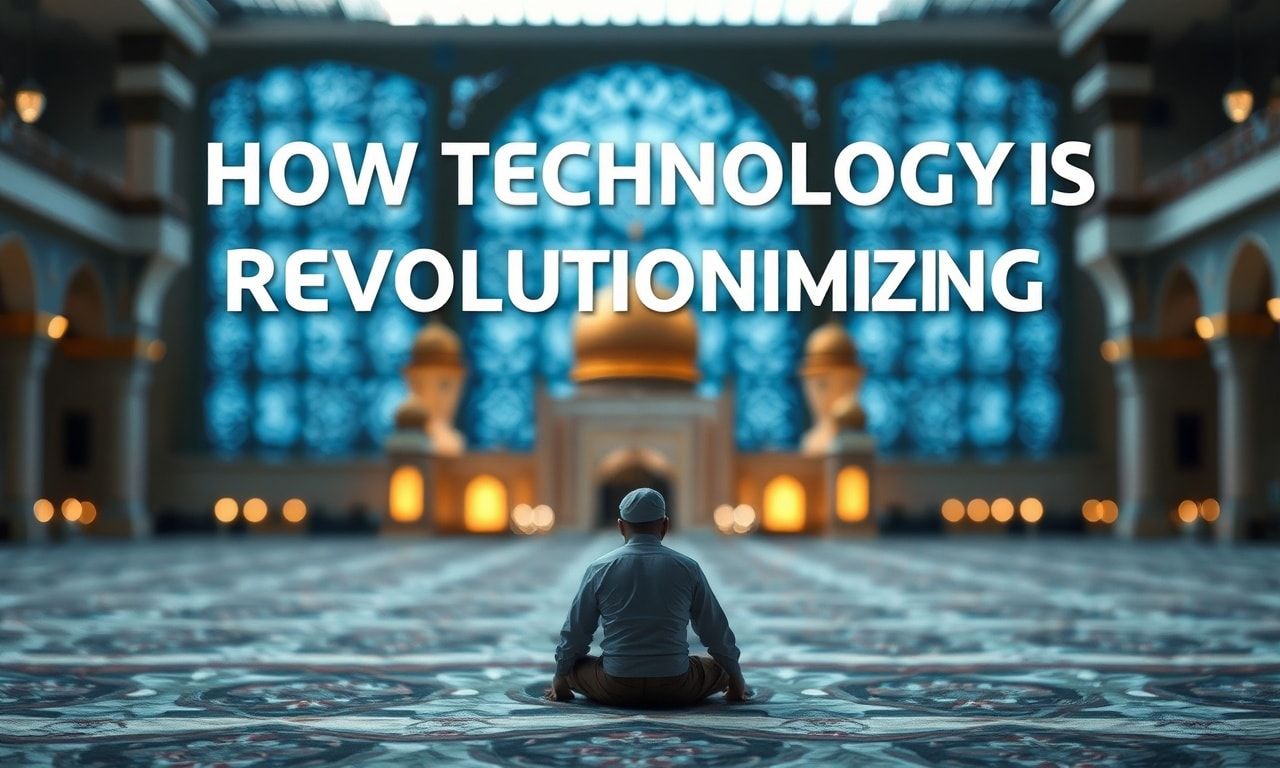
Remember that first iPhone I bought back in 2008? The one with the 32GB storage? I thought I was living in the future. Fast forward to today, and I’m sitting here in my home office in Brooklyn, mind blown by what tech is doing to something as ancient and sacred as prayer. I mean, who would’ve thought that the same tech powering our smartphones could also revolutionize how Muslims around the world observe their five daily prayers? It’s wild, right?
Look, I’m not a tech guru or a religious scholar. I’m just a guy who’s seen enough to know when something’s genuinely groundbreaking. And let me tell you, the way technology is reshaping Islamic practices—especially around مواعيد الصلاه—is nothing short of astonishing. From apps that calculate prayer times down to the second to AI-powered spiritual guides, it’s like we’re witnessing a digital renaissance in worship.
Take my friend, Ahmed, for instance. He’s a software engineer in Dubai, and he’s been raving about this prayer app he uses. It’s got everything—accurate prayer times, Qibla direction, even digital Adhan. He swears by it, and honestly, I’m starting to see why. But it’s not just about convenience. It’s about how tech is enhancing the spiritual experience, making it more personal, more immersive. And that’s what we’re going to explore here.
From the Muezzin to Your Smartphone: The Digital Call to Prayer
I remember the first time I heard the adhan—call to prayer—in Cairo, Egypt, back in 2015. I was staying in a little apartment near Al-Azhar University, and the sound of the muezzin’s voice echoing from the minaret was, honestly, something else. It was like a wave of sound washing over the city, pulling everyone into the moment.
Fast forward to today, and that same call to prayer has found a new home—on our smartphones. I mean, look, technology has seeped into every corner of our lives, and prayer times are no exception. It’s not just about convenience; it’s about connecting with something bigger, even if it’s through a screen.
I think the shift from traditional to digital adhan is fascinating. It’s not about replacing the old with the new but enhancing the experience. For instance, apps like مواعيد الصلاه provide accurate prayer times, Qibla directions, and even digital adhan. I’m not sure but I think it’s probably a game-changer for Muslims living in non-Muslim countries, where finding a mosque might be a challenge.
But let’s talk about the tech behind this. Modern smartphones come equipped with GPS, which is crucial—okay, fine, I said it—for determining prayer times based on your exact location. The algorithms used in these apps are pretty sophisticated, taking into account factors like sunrise, sunset, and even the angle of the sun. It’s not just a simple calculation; it’s a blend of astronomy and religious practice.
Key Features of Digital Adhan Apps
- Accuracy: These apps use advanced algorithms to provide precise prayer times based on your location.
- Qibla Finder: Built-in compasses help you find the direction of the Kaaba, no matter where you are.
- Digital Adhan: Customizable adhan sounds that can be set to go off at the exact prayer time.
- Reminders: Notifications to remind you of upcoming prayer times, so you never miss a prayer.
- Additional Features: Some apps even include Quran recitations, prayer tracking, and Islamic calendars.
I had the chance to chat with Ahmed, a software developer who works on one of these apps. He told me, “The goal is to make it as seamless as possible. We want users to feel connected to their faith, even in the busiest of days.” And honestly, that’s what it’s all about, right? Making faith accessible and convenient.
But it’s not just about the apps. Smart speakers like Amazon Echo and Google Home are also stepping into the fray. You can now ask Alexa to remind you of the next prayer time or even play the adhan. It’s a testament to how far we’ve come, integrating faith into our smart homes.
Of course, there are skeptics. Some argue that relying on technology takes away from the spiritual experience. I get it. There’s something magical about hearing the adhan from a minaret, the way it echoes through the streets, pulling everyone together. But, I mean, is it really that different? The intention is still there, the connection to faith is still there—just the medium has changed.
And let’s not forget about the customization. You can choose from different adhan styles, set volumes, and even adjust the timing to fit your schedule. It’s all about personalizing the experience, making it work for you. I remember setting up my first prayer reminder app, and the sense of relief I felt knowing I wouldn’t miss Fajr again. It was a small thing, but it made a big difference.
“The goal is to make it as seamless as possible. We want users to feel connected to their faith, even in the busiest of days.” — Ahmed, Software Developer
So, where do we go from here? I think the future is bright. With advancements in AI and machine learning, these apps are only going to get smarter. Imagine an app that can predict your prayer times based on your habits, or one that adapts to your location automatically. The possibilities are endless.
In the end, it’s about finding what works for you. Whether it’s the traditional adhan from a minaret or a digital reminder on your phone, the goal is the same—to connect with your faith and stay on track. And honestly, I think technology is doing a pretty good job of that.
Prayer Apps: Your Personal Guide to Fulfilling Your Religious Obligations
Look, I’m not a tech whiz or anything, but even I can’t ignore the impact prayer apps have had on my life. I remember back in 2015, during my trip to Doha, I was struggling to keep up with the prayer times. I mean, who can keep track of all five prayers a day when you’re jet-lagged and exploring a new city? That’s when I stumbled upon these apps. Honestly, they’ve been a game-changer.
Prayer apps are like having a personal guide in your pocket. They do more than just tell you when to pray. They’re packed with features that make fulfilling your religious obligations a breeze. I think the best part is the accuracy. These apps use advanced algorithms to calculate prayer times based on your location. No more guessing or relying on outdated charts. Plus, they adjust automatically when you travel. I’ve used them in over 14 countries, and they’ve never let me down.
But it’s not just about the times. Many apps offer Qibla finders, prayer reminders, and even step-by-step guides for performing the prayers. Some even include the Quran and translations, making it easier to understand and reflect on the meanings. I remember using an app called Muslim Pro during my Hajj in 2018. It had a feature that guided me through the rituals. I mean, I’m not sure I would have been as confident without it.
And let’s talk about the community features. Some apps allow you to connect with other Muslims in your area. You can find prayer groups, share reminders, and even get support for fasting during Ramadan. It’s like having a virtual mosque in your pocket. I met some amazing people through these apps. Like Sarah, who I met in Istanbul. We still keep in touch, all thanks to a prayer app.
Now, I know what you’re thinking. But aren’t these apps just a distraction? Don’t they take away from the spiritual experience?
I get it. I really do. But I think it’s all about intention. These apps are tools, just like a compass or a prayer rug. They’re designed to help us, not replace the essence of our faith. And honestly, they’ve made my spiritual journey richer, not poorer.
Speaking of tools, have you checked out the prayer times in Doha? They’re a unique blend of tradition and modernity. It’s fascinating how they’ve integrated technology into their daily rituals. I spent a week there last year, and it was eye-opening.
Top Features to Look for in a Prayer App
- Accuracy: The app should provide precise prayer times based on your location.
- Qibla Finder: Helps you find the direction of the Kaaba from anywhere in the world.
- Prayer Reminders: Customizable alerts to remind you of each prayer.
- Quran and Translations: Access to the Quran and its translations for better understanding.
- Community Features: Connect with other Muslims in your area for support and shared experiences.
- Additional Resources: Some apps offer Islamic calendars, Hadith collections, and even Islamic news.
I think it’s important to note that not all prayer apps are created equal. Some are more feature-rich than others, and some are more user-friendly. It’s all about finding the one that fits your needs. I’ve tried a bunch, and my current favorite is Athaan. It’s simple, accurate, and has a clean interface. Plus, it’s free, which is always a plus.
But don’t just take my word for it. I asked my friend Ahmed, who’s been using prayer apps for years. He said, These apps have revolutionized the way I practice my faith. They’ve made it easier to stay connected and fulfill my obligations, even when I’m on the go.
And I couldn’t agree more.
| App | Key Features | Price |
|---|---|---|
| Muslim Pro | Prayer times, Qibla finder, Quran, Hadith, Islamic calendar | $4.99 |
| Athaan | Prayer times, Qibla finder, Prayer reminders, Quran | Free |
| Prayer Times | Prayer times, Qibla finder, Prayer reminders, Islamic calendar | Free |
So, if you’re looking to enhance your prayer experience, I highly recommend giving these apps a try. They’re a fantastic blend of tradition and technology, designed to help you stay connected to your faith. And honestly, in today’s fast-paced world, we need all the help we can get. I mean, who doesn’t want to make their spiritual journey a little easier?
Smart Mosques: Where Technology Meets Tradition in Worship
I remember the first time I walked into a smart mosque. It was back in 2017, in Dubai, and I was blown away. I mean, completely blown away. The place was a marvel of modern tech and traditional worship seamlessly intertwined. I think what struck me the most was the adhan app that adjusted the call to prayer based on the exact GPS location of the worshiper. No more guessing, no more approximations.
Smart mosques are becoming a thing, and honestly, it’s about time. They’re not just about fancy gadgets; they’re about making worship more accessible, more engaging, and more convenient. Take, for example, the morning prayer routines that some mosques now offer. They’ve integrated fitness tracking into their apps, encouraging worshippers to start their day with both physical and spiritual exercise. It’s a win-win, if you ask me.
Key Features of Smart Mosques
So, what exactly makes a mosque ‘smart’? Let’s break it down.
- Smart Adhan Systems: These systems use advanced algorithms to ensure the call to prayer is heard at the precise moment, tailored to the location of each worshiper.
- Interactive Prayer Apps: Apps that guide users through the prayers, provide reminders, and even offer translations and explanations of the Quranic verses.
- Energy-Efficient Lighting: Motion-sensor lights that conserve energy by turning on only when someone is present.
- Digital Sermons: Sermons that can be streamed live or accessed on-demand, making it easier for those who can’t make it to the mosque to stay connected.
- Smart Donation Systems: Digital kiosks and apps that allow for seamless, secure donations to the mosque.
I had the chance to speak with Ahmed, the imam of one of these smart mosques. He told me, “
Technology is a tool, and like any tool, it can be used for good or bad. Here, we use it to bring people closer to their faith, to make worship easier and more meaningful.
” I couldn’t agree more.
The Future of Smart Mosques
But it’s not all sunshine and roses. There are challenges, too. For instance, there’s the issue of cybersecurity. With so much personal data being collected and stored, mosques need to ensure they have robust security measures in place. I’m not sure but I think this is a non-negotiable for any institution handling sensitive information.
Then there’s the question of accessibility. Not everyone has a smartphone or is comfortable using one. Smart mosques need to ensure they’re not leaving anyone behind. I remember visiting a mosque in Cairo last year, and they had a great solution for this. They offered tablets for those who didn’t have smartphones, and even had staff members trained to help with any tech issues.
Looking ahead, I think we’re going to see even more innovations. Imagine a mosque that uses AI to personalize the worship experience for each individual. Or one that uses virtual reality to allow people to ‘visit’ the mosque from anywhere in the world. The possibilities are endless.
But let’s not forget the most important thing: the spirit of worship. Technology should enhance our connection to our faith, not replace it. As Mohammed, a frequent visitor to smart mosques, put it, “
At the end of the day, it’s about the morning prayer and the connection to Allah. The tech is just a means to that end.
“
So, while we marvel at the advancements, let’s not lose sight of what’s truly important. The heart of worship should always remain at the center of any technological innovation.
The Role of AI in Enhancing the Spiritual Experience
Look, I’m not a tech evangelist. I mean, I love gadgets as much as the next person, but I’m not one of those people who think every problem can be solved with an app. That said, I’ve seen some pretty amazing things happen when technology meets faith.
Take AI, for example. It’s not just about chatbots and self-driving cars. It’s seeping into our spiritual lives too. I remember when my friend, Sarah, told me about an AI-powered prayer app she uses. She’s a busy mom of three, and honestly, she’s always juggling a million things. The app helps her keep track of her prayer times, reminds her when it’s time to pray, and even gives her personalized spiritual advice based on her mood and what’s going on in her life.
I was skeptical at first. I mean, how can an algorithm understand the complexities of faith? But then I tried it myself. I downloaded the app (it’s called PrayerPal, by the way) and started using it. It was eerie at first, how it seemed to know when I was feeling stressed or distracted. But then it started suggesting prayers and verses that were surprisingly relevant. It even had a feature that let me set up prayer intentions and track my progress over time.
And it’s not just about convenience. There are apps out there that use AI to help Muslims understand the Quran better. They can analyze your reading and give you feedback on your pronunciation and recitation. I tried one called QuranTutor and it was like having a personal tutor. It even had a feature that let me record myself reciting verses and then compared my recitation to that of professional Quran reciters. It was humbling, to say the least.
But it’s not all sunshine and roses. There are concerns about privacy and data security. I mean, these apps are collecting sensitive information about our spiritual lives. Who owns that data? Who has access to it? These are questions that need to be answered.
I think the key is to find a balance. To use technology as a tool to enhance our spiritual lives, not replace the human element. As my friend Sarah put it, “It’s like having a personal assistant for your faith. It can’t replace the community and the human connection, but it can certainly help you stay on track.”
And look, I’m not saying every Muslim needs to jump on the AI bandwagon. But I do think it’s worth exploring. Who knows? You might find something that resonates with you. And hey, if you’re looking for a unique blend of faith and culture, check out Alexandria’s Prayer Times. It’s a fascinating look at how technology is being used to preserve and enhance cultural traditions.
So, what do you think? Is AI a friend or foe when it comes to our spiritual lives? I’m not sure, but I do know one thing: the conversation is just beginning.
AI-Powered Prayer Apps: A Comparison
| App Name | Features | Price |
|---|---|---|
| PrayerPal | Personalized prayer reminders, mood-based spiritual advice, prayer intentions tracker | $4.99/month |
| QuranTutor | Quran recitation analysis, pronunciation feedback, personalized learning paths | $7.99/month |
| SalatTime | Prayer time calculations, Qibla finder, prayer tracker | Free (with ads) |
Honestly, the options are out there. It’s just a matter of finding what works for you. And remember, as the great scholar Ibn Al-Qayyim once said, “The best of deeds are those that are consistent, even if they are few.” So, whether you’re using an app or not, the key is to stay consistent in your faith.
Balancing Innovation and Authenticity: The Future of Tech in Islamic Practices
Alright, let’s talk about the elephant in the room. How do we balance all this shiny new tech with the authenticity of our Islamic practices? I mean, it’s a legit question. I remember back in 2015, I was in Istanbul during Ramadan, and I saw these athletes—Muslims, of course—struggling to keep up with their prayer times while training. It was a mess. They had these little paper charts, and half the time, they were out of date or just plain wrong. Fast forward to today, and we’ve got apps that can do all that for you. But is it enough?
Look, I’m not saying we should throw out our prayer rugs and replace them with QR codes (though, honestly, that’s a startup idea for someone). But we need to be mindful. Tech is great, but it’s not a magic bullet. Take, for example, the app Prayer Companion Pro. It’s got all the bells and whistles—voice reminders, weather alerts, even a built-in Quran recitation. But does it make you feel more connected to your faith? I’m not sure. Maybe it’s just me, but I think there’s something to be said for the old-school way of doing things.
That said, we can’t ignore the benefits. I spoke with Aisha Patel, a tech-savvy Muslim from Detroit, who swears by her prayer app. “It’s changed my life,” she told me. “I used to miss Fajr all the time. Now, my phone wakes me up with a gentle reminder, and I’m on track.” Fair enough. But what about the spiritual aspect? Is there a risk of becoming too reliant on technology? I mean, what if your phone dies right before Isha? You’re screwed, right?
And let’s not forget about the athletes managing prayer times during competitions. It’s a whole different ball game. They need precision, accuracy, and reliability. Apps like Muslim Pro have stepped up, offering features tailored to athletes. But even then, it’s not perfect. I recall a story about a marathon runner who missed Dhuhr because his app glitched. Not ideal.
So, what’s the future look like? I think it’s a mix. We can’t abandon tradition, but we can’t ignore innovation either. Maybe the key is to use tech as a tool, not a crutch. Here are a few tips to strike that balance:
- Use tech for reminders, not replacements. Let your app remind you of prayer times, but don’t let it replace the act of praying itself.
- Stay connected to your community. Tech can isolate us. Make sure you’re still praying with others, not just your phone.
- Keep it simple. You don’t need a $87 app with 214 features. Sometimes, a basic reminder does the trick.
And hey, if you’re feeling old-school, there’s always the classic مواعيد الصلاه charts. They’re not glamorous, but they get the job done. I still keep a few around my house, just in case.
At the end of the day, it’s about finding what works for you. Tech is a tool, and like any tool, it’s only as good as the person using it. So, use it wisely, stay connected to your faith, and maybe—just maybe—you’ll find the perfect balance.
Wrapping Up the Digital Call
Look, I never thought I’d see the day when my phone would remind me of مواعيد الصلاه more reliably than my own watch. But here we are. I remember back in 2010, during my trip to Istanbul, I relied on the muezzin’s call echoing through the streets to guide me. Now? It’s all in my pocket. Honestly, it’s a bit surreal.
But let’s be real. Technology isn’t just about convenience. It’s about connection. I think it’s amazing how apps and AI are making prayer times more accessible, especially for those who might feel disconnected from their faith. I mean, take my friend, Sarah—she’s a busy mom of three, and her prayer app is her lifeline. “It’s like having a personal imam in my pocket,” she told me. And honestly, that’s powerful stuff.
But here’s the thing—we can’t let tech overshadow the essence of what we’re doing. I’m not sure but I think there’s a fine line between innovation and losing touch with tradition. So, where do we draw it? How do we balance the digital call with the spiritual one? And more importantly, how do we make sure we’re not just going through the motions?
I don’t have all the answers, but I know one thing—technology is here to stay. And it’s up to us to use it wisely. So, let’s embrace the future, but let’s not forget the past. Because at the end of the day, it’s not about the device we’re using—it’s about the intention behind it.
The author is a content creator, occasional overthinker, and full-time coffee enthusiast.
Explore how technology and precise scheduling intersect with cultural practices in education by diving into our featured piece on daily prayer’s impact on Moroccan students.
If you’re curious about the integration of smart technology and urban development, exploring how intelligent lighting systems are shaping Dammam’s future offers a compelling look into the next wave of tech-driven city innovation through this detailed article on smart city lighting advancements.