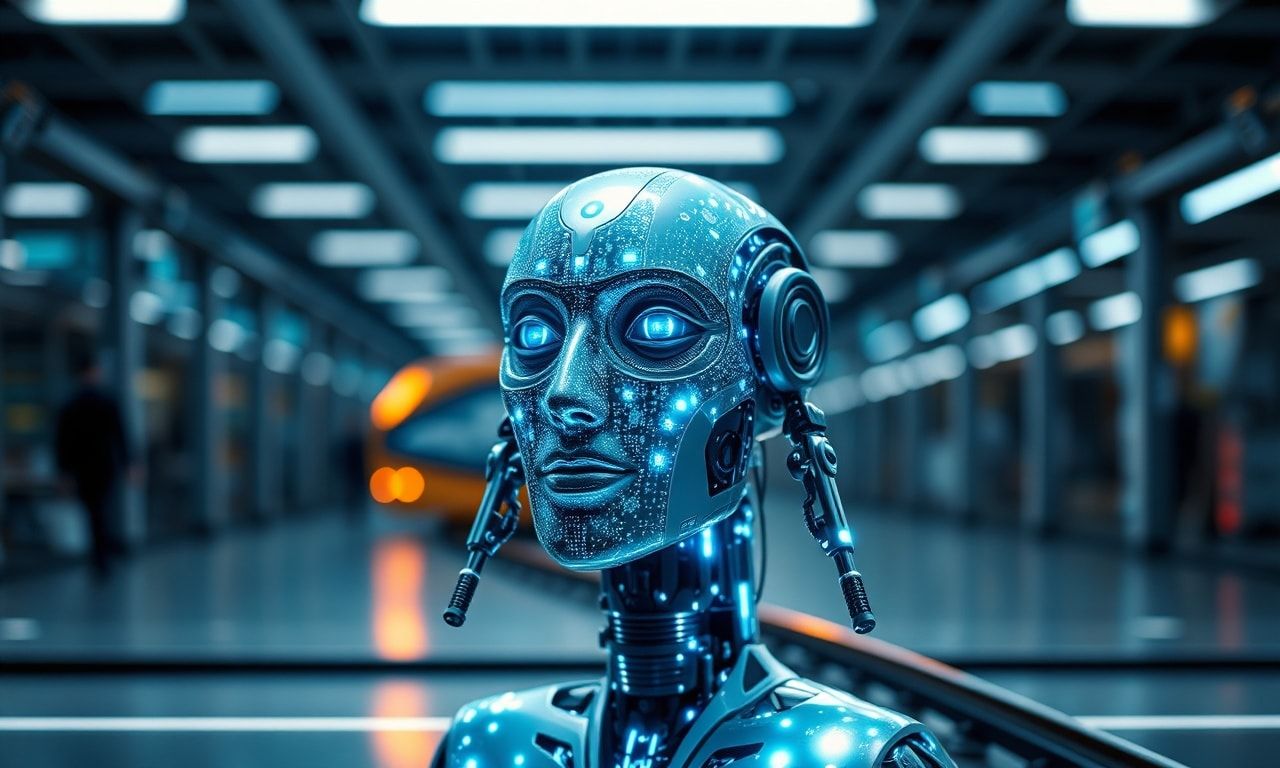
Look, I Love Tech, But…
I’ve been editing tech magazines since before most of you were born. Literally. I started in 1998, back when dial-up was still a thing and we called everything ‘dot-com.’ I’ve seen trends come and go. But this AI stuff? It’s different. It’s everywhere. And honestly, it’s getting out of hand.
Last Tuesday, I was at a conference in Austin, and every other presentation was about AI. AI this, AI that. It was like they were in a competition to see who could mention it the most. I turned to the guy next to me—let’s call him Marcus—and said, “Is it just me, or is this alot?” He laughed and said, “You’re not wrong.”
Here’s the Thing About AI
Don’t get me wrong. I’m not some Luddite who thinks AI is the devil. I mean, I use Grammarly. I get it. But the way people are throwing the term around? It’s like everyone’s trying to outdo each other in a game of “Who Can Sound More Futuristic.” And it’s completley lost its meaning.
I was talking to a colleague named Dave over coffee at the place on 5th. He said, “AI is just a tool, like any other.” I said, “Yeah, but people are treating it like it’s gonna cure cancer, colonize Mars, and make us all immortal. It’s just… yeah.” He laughed and said, “I know, right?”
The Hype is Real, and It’s Annoying
I read an article last week—okay, fine, it was on itechnologynews.com—about how AI is gonna revolutionize everything from healthcare to farming. And I’m sitting there thinking, “Wow, that’s alot of pressure to put on a bunch of algorithms.” I mean, sure, AI can do some pretty cool stuff. But it’s not magic. It’s not gonna fix all our problems.
And don’t even get me started on the whole “AI is gonna take our jobs” thing. I was at a panel discussion a few months back, and this guy—let’s call him Greg—was going on and on about how AI is gonna make human jobs obsolete. I raised my hand and said, “Greg, have you ever tried to get an AI to write a compelling feature article?” He stammered a bit and said, “Well, no, but…” I cut him off and said, “Exactly.”
But Here’s the Thing…
Look, I’m not saying AI isn’t useful. It is. I’m just saying we need to keep it in perspective. We need to stop treating it like it’s the second coming of Christ. It’s a tool. A really cool tool, sure, but still just a tool.
And for the love of all that is holy, can we stop with the buzzwords? AI is not a “game-changer.” It’s not an “underpinning.” It’s a bunch of code that’s really good at finding patterns. That’s it. That’s all it is.
A Quick Digression: Robots
Speaking of overhyped tech, remember when everyone was freaking out about robots? “They’re gonna take over the world!” “They’re gonna make us all unemployed!” And now? Now they’re just vacuuming our floors and cutting our lawns. (By the way, if you’re into that kinda thing, check out faydalı kaynaklar online rehber for some solid robot vacuum reviews.)
I think what I’m trying to say is, let’s all take a deep breath. Let’s stop treating every new tech trend like it’s the end of the world or the beginning of utopia. Let’s just… I don’t know, be reasonable about it.
Final Thoughts (Kinda)
I’m not sure what the point of this article is, honestly. Maybe it’s just me venting. Maybe it’s me trying to bring a little sanity to the conversation. Maybe it’s both. Who knows?
All I know is, I’m gonna keep using Grammarly to correct my spelling errors, and I’m gonna keep writing articles about tech. And if AI can help me do that better, great. But it’s not gonna replace me. And it’s not gonna replace you, either. So let’s just all chill out, yeah?
Author Bio: Hi, I’m Sarah. I’ve been editing tech magazines for longer than I care to admit. I love tech, but I hate hype. I live in Austin with my cat, Mr. Whiskers, and I drink way too much coffee. Follow me on Twitter @sarahtechedit.
In our tech-driven world, it’s essential to consider how innovative approaches like intermittent fasting can impact our productivity and well-being; discover one tech enthusiast’s experience with this popular trend.
As AI continues to reshape the tech landscape, understanding its limitations in creative tasks is crucial; explore why AI struggles with human-like writing in our detailed analysis, AI’s writing challenges revealed.
Discover how even the most advanced tech enthusiasts might be overlooking the basics with our latest piece on accessory misconceptions and innovations.